


Blog Intro Generator
Turn a finished title, a clear topic, or an existing draft into an opening paragraph that gives readers a reason to continue. ChatGOAT AI helps you generate focused introductions that match the audience, tone, and promise of the article without spending extra time forcing the first few lines.
What Is a Blog Intro Generator?
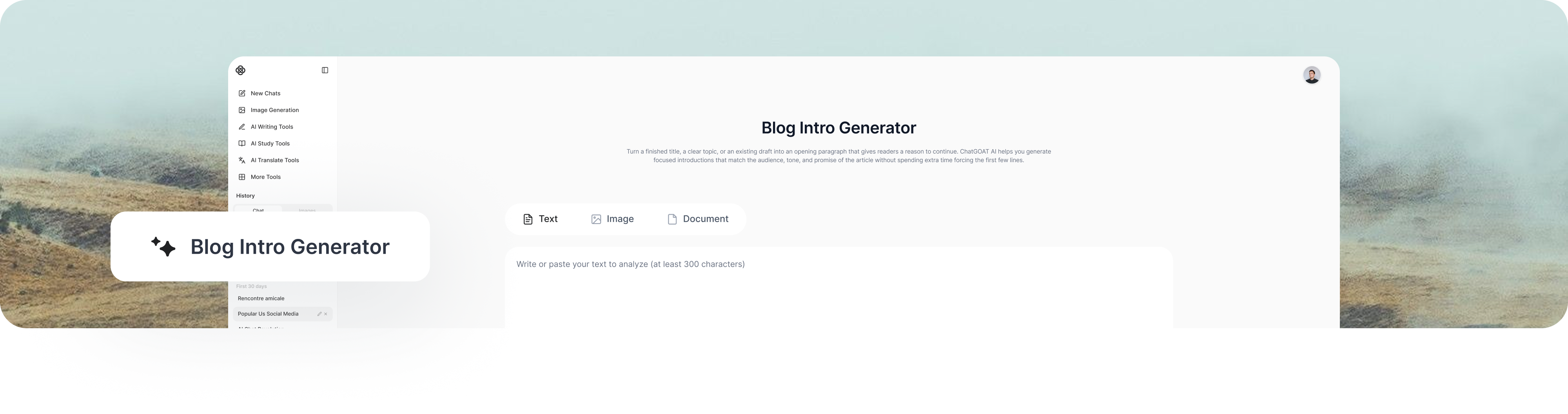
The first few lines of a post decide whether readers stay, and they’re often the hardest to write. A blog intro generator drafts that opening for you from a title, topic, or existing draft, framing the reader’s problem and what the article will deliver. On ChatGOAT AI, you can set the tone and keyword, then compare several versions before picking one.
How to Use ChatGOAT AI's Blog Intro Generator
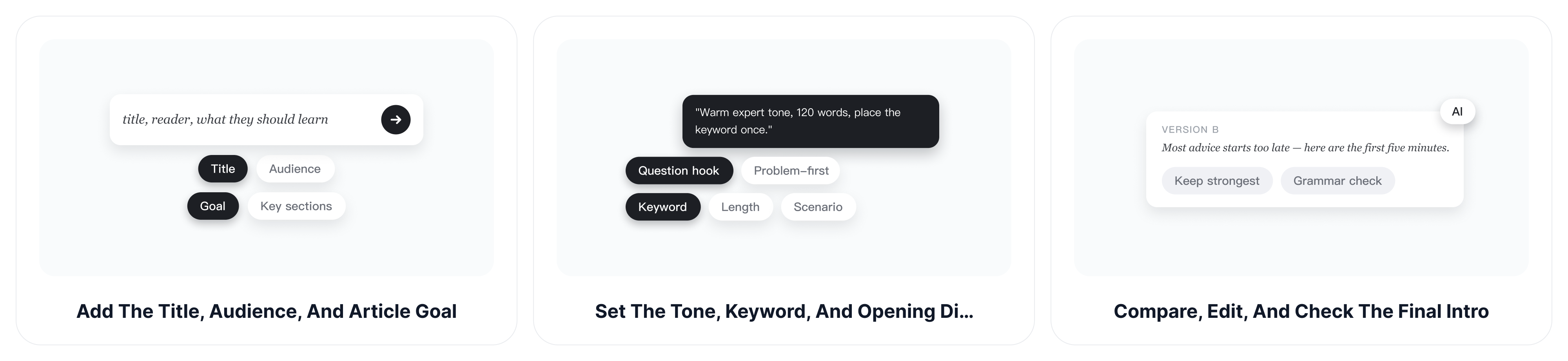
Give the tool enough context to understand the article, then compare and refine the result instead of accepting a generic first draft. The process only requires three steps.
Step 1: Add the Title, Audience, and Article Goal
Enter the working title or topic, describe the intended reader, and state what the article should help that reader learn or do. If the body already exists, include the main argument or key sections so the opening accurately prepares readers for what follows.
Step 2: Set the Tone, Keyword, and Opening Direction
Choose the tone and desired length, then add the main keyword naturally. You can also request a question-led hook, a problem-first opening, a brief scenario, or several contrasting versions when you want to compare different approaches.
Step 3: Compare, Edit, and Check the Final Intro
Review whether each version fits the article rather than judging the hook in isolation. Keep the strongest direction, replace vague claims, and verify that the promised value appears in the body. Before publishing, use the AI grammar checker to catch sentence-level errors without changing the meaning or voice you selected.
Create a Focused Opening with a Blog Introduction Generator
A useful introduction does more than announce the topic. It connects the reader's immediate question with a clear reason to keep reading, while leaving the supporting details for the body of the article.
Start with a Hook That Fits the Topic
Choose a hook that belongs in the article instead of adding drama for its own sake. Depending on the subject, the opening can begin with a practical problem, a direct question, a specific observation, a short scenario, or a credible fact you can support later in the post.
For example, an article titled "Why Does My Indoor Plant Keep Wilting?" could open with: "You water on schedule, keep the pot near a window, and the leaves still droop. The problem may be how the plant receives water rather than how often you reach for the watering can."
Address the Reader's Immediate Problem
Tell ChatGOAT AI what the audience is trying to understand, fix, choose, or achieve. A blog introduction generator can then move beyond a broad definition and frame the opening around the concern that brought the reader to the page.
Preview the Value without Summarizing the Whole Post
Readers want to know early whether the article will answer the exact question that brought them to the page. Use the introduction to name the problem, decision, or outcome the post will address, but save the supporting steps and evidence for the body so the opening creates direction without becoming a summary.
For a post titled "How to Build a Weekly Meal Plan on a Budget," a focused opening could read: "Planning meals should save money, not create another complicated weekend task. This guide shows busy families how to build a realistic weekly plan, reuse ingredients, and reduce last-minute grocery spending without eating the same meal every day." The example identifies the problem and the payoff while leaving the practical steps for the article itself.
Match the Voice and Length to the Article
Specify whether the article should sound conversational, professional, instructional, persuasive, or concise. An article introduction generator is more useful when it also knows the reading level, brand voice, and approximate length you want, because an opening for a technical guide should not read like the start of a lifestyle listicle.
For example, a beginner guide to password managers may request: "Use a reassuring, nontechnical tone for first-time users." A cybersecurity article for IT teams can cover the same topic with precise terminology and a more direct opening.
Improve Blog Introductions without Overwriting Them
Once the first draft exists, edit for accuracy, specificity, and pace. The goal is not to make the introduction more dramatic, but to ensure every claim is supportable and every promise matches what the article actually delivers.
Verify Claims before Publishing
Check every statistic, quotation, comparison, and factual claim introduced in the opening. If the article does not provide a reliable source or supporting explanation, replace the claim with a specific observation that the body can demonstrate.
Keep the Reader Promise Specific
Replace broad phrases such as "everything you need to know" with a concrete outcome. Tell readers whether they will learn a process, compare options, avoid a common mistake, or make a decision by the end of the article.
Remove Generic Setup and Repetition
Cut definitions the audience already knows, repeated versions of the title, and background that delays the point. Each sentence should either establish the reader's situation, clarify the article's angle, or lead naturally into the first main section.
Revisit the Intro after the Draft Is Complete
The article may change while you write, so compare the opening with the finished headings, evidence, and final takeaway. If the ending also needs to reflect the developed argument, the conclusion generator can help you draft a closing that complements the introduction without simply repeating it.
Why Choose ChatGOAT AI's Blog Intro Generator?
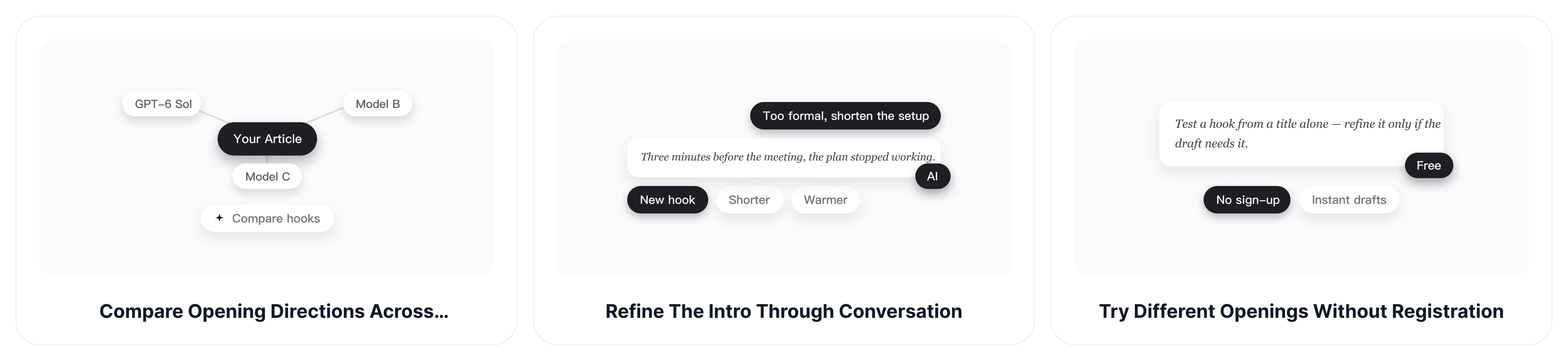
ChatGOAT AI combines flexible AI access with a conversational writing workflow, helping you move from a rough opening idea to an introduction that fits the actual article.
Compare Opening Directions across Multiple AI Models
Different AI models may emphasize the reader's problem, the article's promise, or the tone in different ways. ChatGOAT AI brings multiple models into one platform, so you can compare approaches when the first opening feels predictable or does not suit the subject.
Refine the Intro through Conversation
Explain what feels too generic, formal, promotional, long, or disconnected from the draft. You can preserve the useful idea while asking ChatGOAT AI to change only the hook, shorten the setup, strengthen the transition, or align the wording with your established voice.
Try Different Openings without Registration
Start with a title or topic and test different hooks without creating an account. The free, no-sign-up workflow removes extra steps when you need an opening quickly, while still giving you room to compare alternatives before choosing the version that best fits the article.
Continue from Opening Paragraph to Full Draft
An introduction is only the first part of the writing process. After selecting the opening, continue developing sections, transitions, and supporting points with the AI blog writer while keeping the article's central promise consistent from the first paragraph onward.
Blog Intro Generator FAQs
Find quick answers about the input, length, keywords, editing, and reuse of generated blog introductions.
What should I enter into a blog intro generator?
Provide the title or topic, intended audience, article goal, preferred tone, and any point the opening must mention. A brief outline or draft gives the tool more context, but it is not required.
Can I generate an introduction before writing the article body?
Yes. A working title and a clear description of the planned content are enough to create an initial opening. Review it again after completing the article so the promise still matches the final draft.
How long should a blog introduction be?
There is no single ideal length for every post. Keep it proportionate to the article and long enough to establish the reader's problem, the angle, and the value without delaying the first useful section. For many web articles, one to three short paragraphs is sufficient.
Can I include an SEO keyword in the introduction?
Yes. Add the primary keyword when it fits the sentence naturally and helps clarify the topic. Do not force repeated exact matches into a short opening, because readability and relevance still matter.
Can the tool create several introductions for the same title?
Yes. Ask for multiple versions using different hooks, tones, or levels of detail. Comparing alternatives is useful when you know the topic but have not decided how direct, conversational, or formal the opening should feel.
How do I make an AI-generated introduction sound like me?
Share a short sample of your writing or describe the voice you want to preserve. Then edit the output for your usual vocabulary, sentence rhythm, examples, and point of view rather than publishing the first version unchanged.
Can I rewrite the introduction of an existing post?
Yes. Paste the current opening with the title and key sections, then explain what needs to improve. You can request a tighter hook, clearer reader benefit, updated angle, or better match with the revised article.
What is the difference between a blog intro generator and an article introduction generator?
The terms often describe the same core task: producing an opening from a topic or title. The most useful tool is one that lets you control the audience, tone, length, and promise, regardless of whether the final piece is called a blog post or an article.