


Claude Fable 5.5 is Ready





 AI Chat
 AI Image
 AI Video
 AI Writing
 AI Study
 AI Work
 AI Translate






One Platform. Multiple AI Models.
Meet, chat, and create with leading AI models like GPT 6 Luna, Claude Haiku 5.5, Grok-4.1 Fast and more — all in a single, simple platform.



Trusted by millions of users worldwide




Claude Fable 5.5 Free - Experience Anthropic’s Most Advanced AI Online
Claude Fable 5.5 is built for advanced reasoning, long-horizon agentic work, coding, research, and complex knowledge tasks. On ChatGOAT AI, you can try it directly in your browser - no API key or developer setup required. While the Fable family is positioned by Anthropic for high-end coding and knowledge work, Fable 5.5 has not yet been officially confirmed and should be treated as an upcoming model.
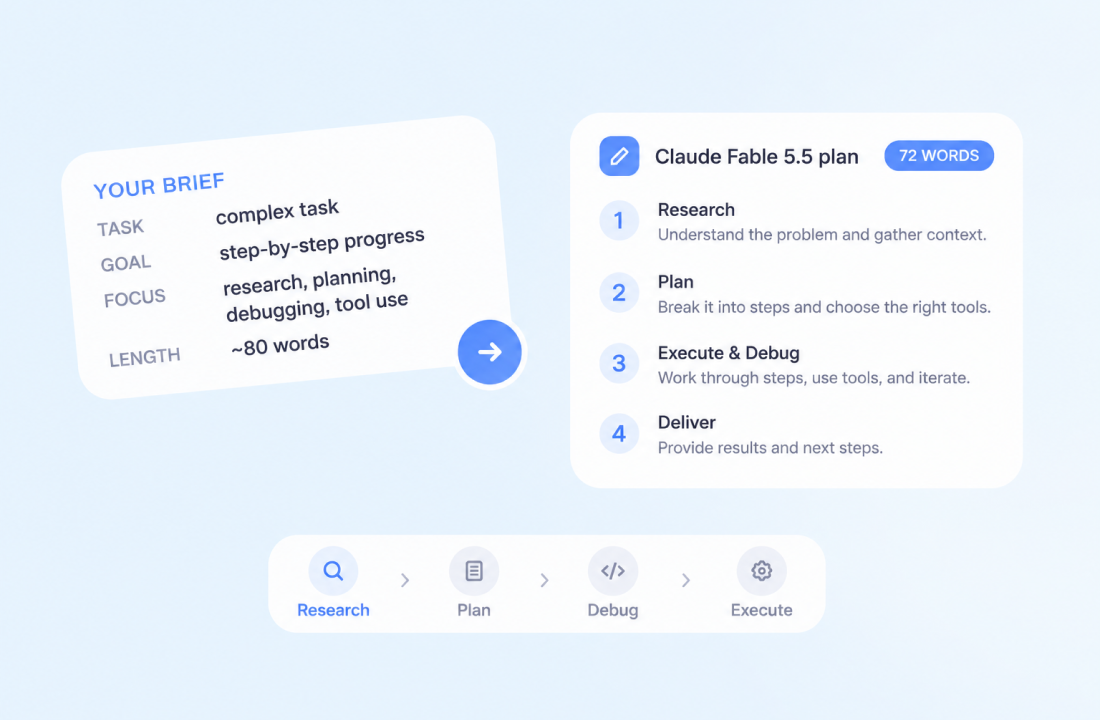
Sustained Autonomy for Long Tasks
Claude Fable 5.5 is designed to keep a complex task on track across multiple steps, from research and planning to debugging and tool-based execution. It helps turn a broad goal into a clear sequence of actions, making it useful for agentic workflows that require context, iteration, and follow-through.
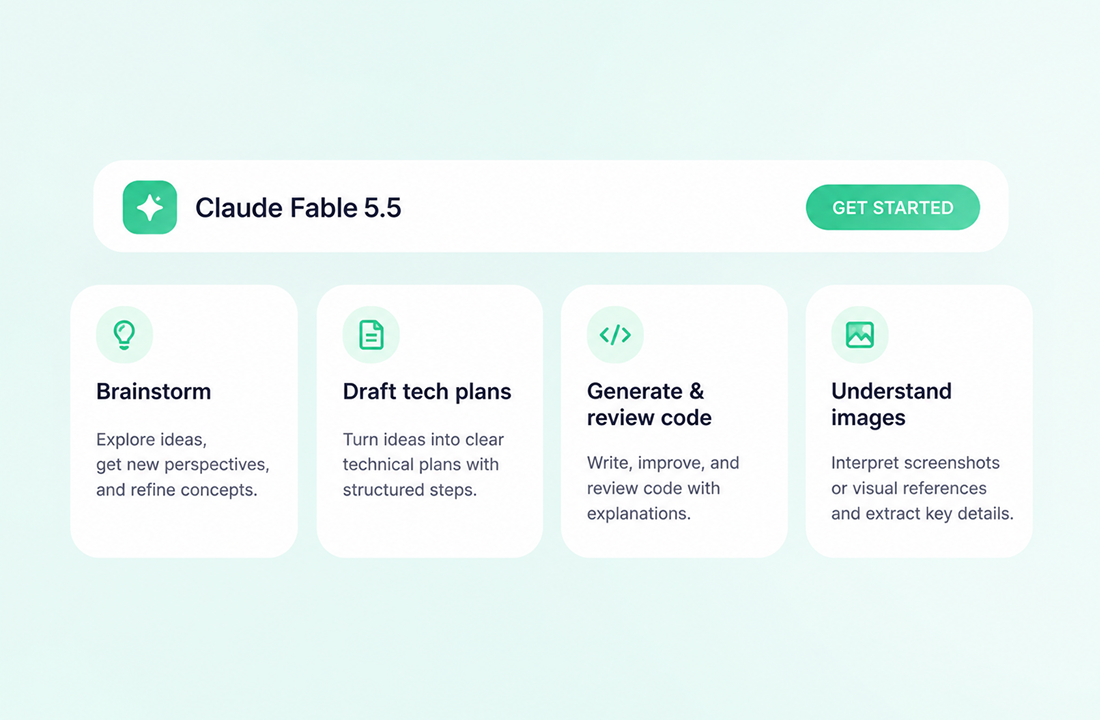
Creative Coding, Visual Understanding, and Multimodal Generation
Use Claude Fable 5.5 to brainstorm ideas, draft technical plans, generate and review code, and interpret screenshots or visual references. With support for text and image input, vision, and tool use, it can connect creative direction with practical implementation in one workflow.
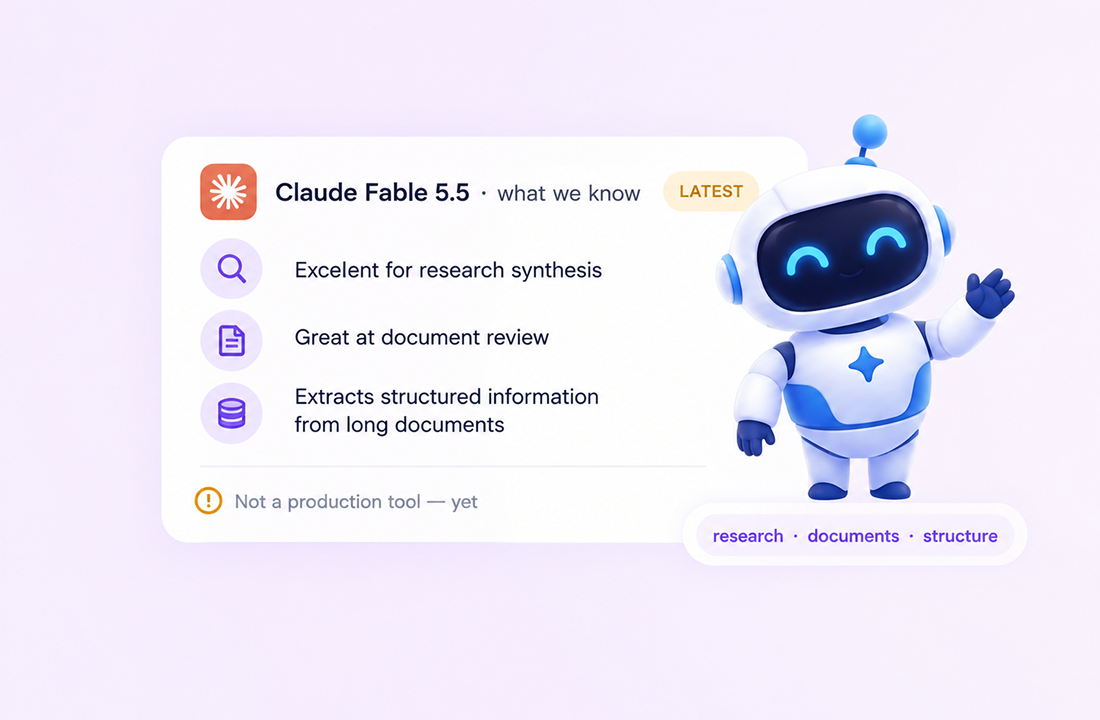
Deep Research and Long-Document Analysis
Claude Fable 5.5 is suited to research synthesis, document review, and structured extraction from long materials. Current Fable models support a 1M-token context window and 128K output tokens, allowing you to work with lengthy PDFs, reports, specifications, and meeting notes without losing the broader thread.
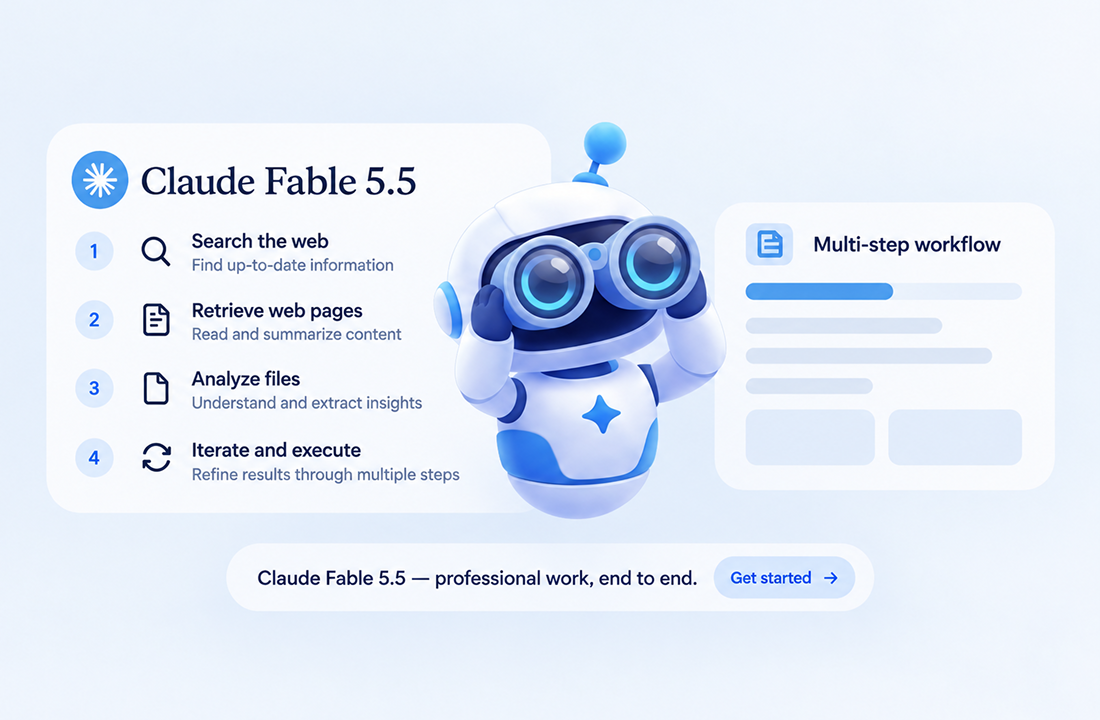
Reliable Tool Use for Professional Workflows
Claude Fable 5.5 can support multi-step professional work through tool use, including web search, page retrieval, file analysis, and iterative task execution. This makes it practical for source-checked research, project planning, code review, and producing ready-to-use drafts and briefs.
Why Choose Claude Fable 5.5 on ChatGOAT AI?
Why Choose Claude Fable 5.5 on ChatGOAT AI

Start Without Complicated Setup
Open ChatGOAT AI, choose Claude Fable 5.5 from the model selector, and enter your request. This makes it easier for users to explore the model without configuring an API or building a separate technical workflow.

Use One Workspace for Many Tasks
Writing, summarization, learning, brainstorming, translation, coding, and file organization can all be handled in one place. You can continue asking questions about the same topic without repeatedly moving context between different tools.

Refine Results Through Conversation
The first response does not have to be the final version. Ask Claude Fable 5.5 to change the tone, add examples, shorten the answer, convert it into a different format, or explain a particular step until the result better matches your goal.

Try It for Free Before You Commit
ChatGOAT AI provides a free trial entry point, making it easier to test Claude Fable 5.5 with real work, study, or creative tasks. Free usage limits, model access, and feature availability may change, so refer to the current ChatGOAT AI product page and interface for the latest details.
How to Use Claude Fable 5.5 on ChatGOAT AI
How to Use Claude Fable 5.5 on ChatGOAT AI
Step 1: Open Claude Fable 5.5 on ChatGOAT AI
Go to the Claude Fable 5.5 page on ChatGOAT AI and select Claude Fable 5.5 from the model selector.

Step 2: Add Your Task and Materials
Enter a clear prompt, paste text, upload a document, or share code.
Step 3: Refine the Result with Follow-Ups
Review the first response and continue the conversation to improve it.
Try Claude Fable 5.5 on ChatGOAT AI Now
Test Claude Fable 5.5 on your real work - code, research, strategy documents, product ideas, or complex multi-step projects. Start free in your browser, with no API key or developer setup required.
What Users Say About Claude Fable 5.5
What Users Say About Claude Fable 5.5
I gave it a messy product brief, three competitor PDFs, and a rough feature list. It turned everything into a clean roadmap with priorities, risks, and open questions. It felt like having a strategy analyst on call.

I gave it a messy product brief, three competitor PDFs, and a rough feature list. It turned everything into a clean roadmap with priorities, risks, and open questions. It felt like having a strategy analyst on call.
The coding workflow is the standout. I described a bug across two services, shared the relevant files, and got a clear diagnosis plus a refactor plan instead of a generic code snippet.

The coding workflow is the standout. I described a bug across two services, shared the relevant files, and got a clear diagnosis plus a refactor plan instead of a generic code snippet.
I used it to review a 70-page market report. It pulled out the assumptions, flagged weak evidence, and built a source-linked summary I could actually share with my team.

I used it to review a 70-page market report. It pulled out the assumptions, flagged weak evidence, and built a source-linked summary I could actually share with my team.
For design reviews, I upload screenshots and ask for accessibility, hierarchy, and copy feedback. It catches issues I usually notice only after launch.

For design reviews, I upload screenshots and ask for accessibility, hierarchy, and copy feedback. It catches issues I usually notice only after launch.
I use it for technical documentation. It keeps terminology consistent across long documents and can turn dense release notes into user-friendly guides.

I use it for technical documentation. It keeps terminology consistent across long documents and can turn dense release notes into user-friendly guides.
It is especially good at breaking a vague goal into an actual plan. I asked for a launch checklist and got sequencing, dependencies, owners, and fallback options—not just a list of buzzwords.

It is especially good at breaking a vague goal into an actual plan. I asked for a launch checklist and got sequencing, dependencies, owners, and fallback options—not just a list of buzzwords.
FAQ
FAQ
What is Claude Fable 5.5?

Is Claude Fable 5.5 available for free on ChatGOAT AI?
How is Claude Fable 5.5 different from Claude Fable 5.1?
Can Claude Fable 5.5 analyze images and documents?
What is Claude Fable 5.5 best for?
Does Claude Fable 5.5 replace GPT-6.1 Sol?
Is Claude Fable 5.5 officially released?